The Civil Rights Movement
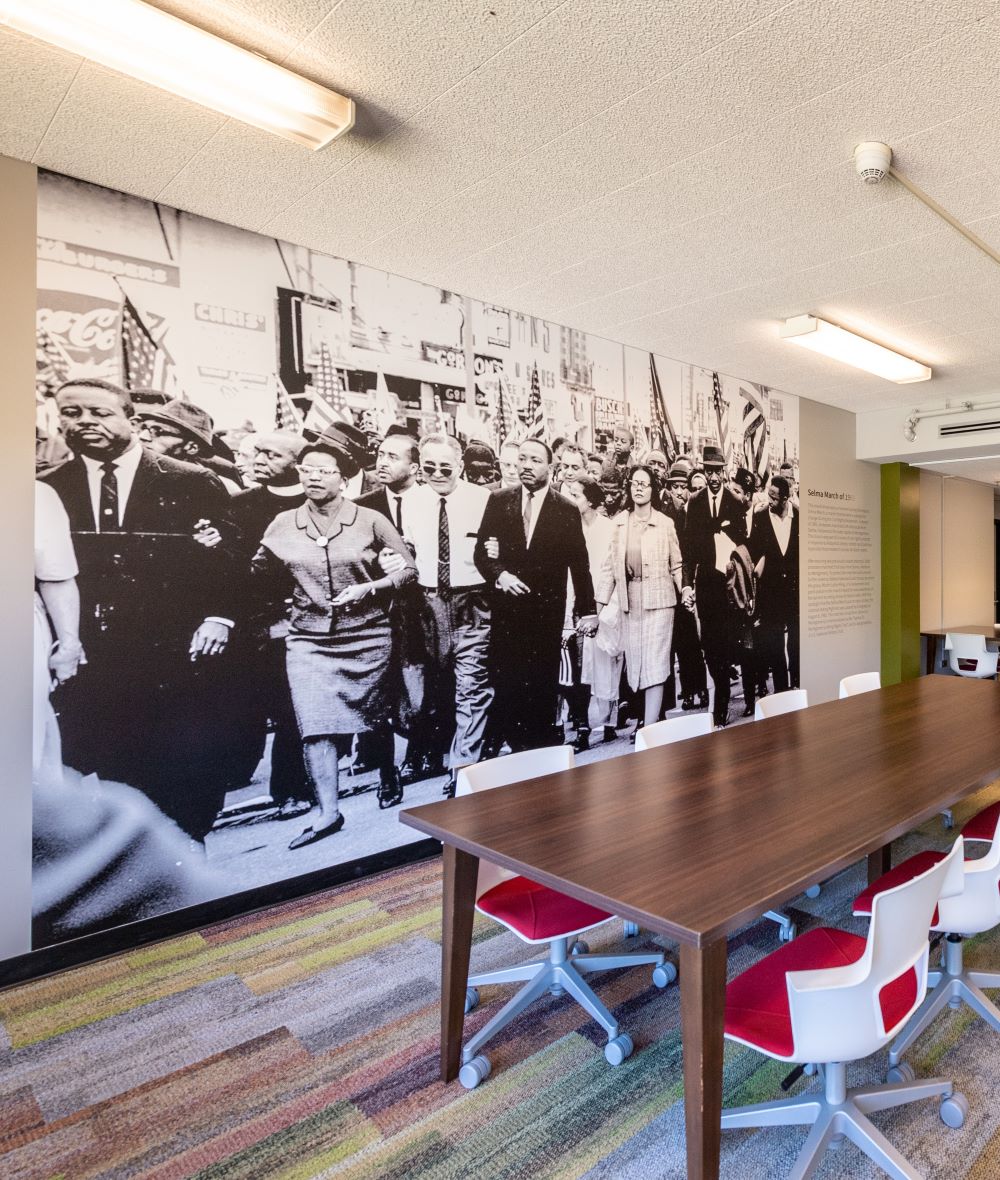
Martin Luther King Jr. Minority Culture Lounge (Bursley Hall, University of Michigan)
The Civil Rights Movement is a pivotal chapter in American history. During these years, brave individuals and communities fought against discrimination and injustice, pushing for a fair and equal society. The sacrifices and successes of this era laid the groundwork for a more inclusive America. Understanding the battles, triumphs, and sacrifices of this movement is key to appreciating the journey toward racial equality.
Throughout the Civil Rights Movement, many figures rose to prominence, Dr. Martin Luther King Jr., Malcolm X, and Rosa Parks, but also others such as A. Phillip Randolph, Ella Baker, John Lewis, and Medgar Evers. These activists and other supporters participated in many influential demonstrations, such as the Montgomery bus boycott (1955-1956), the Freedom Riders (1961), the March on Washington for Jobs and Freedom (1963), and the march from Selma to Montgomery (1965).
These figures were also part of and supported by larger communities and organizations of people fighting for racial equality in the form of the Student Nonviolent Coordinating Committee (SNCC), Southern Christian Leadership Conference (SCLC), and the Black Panthers.